
+86 13923163484
info@fufujing.com
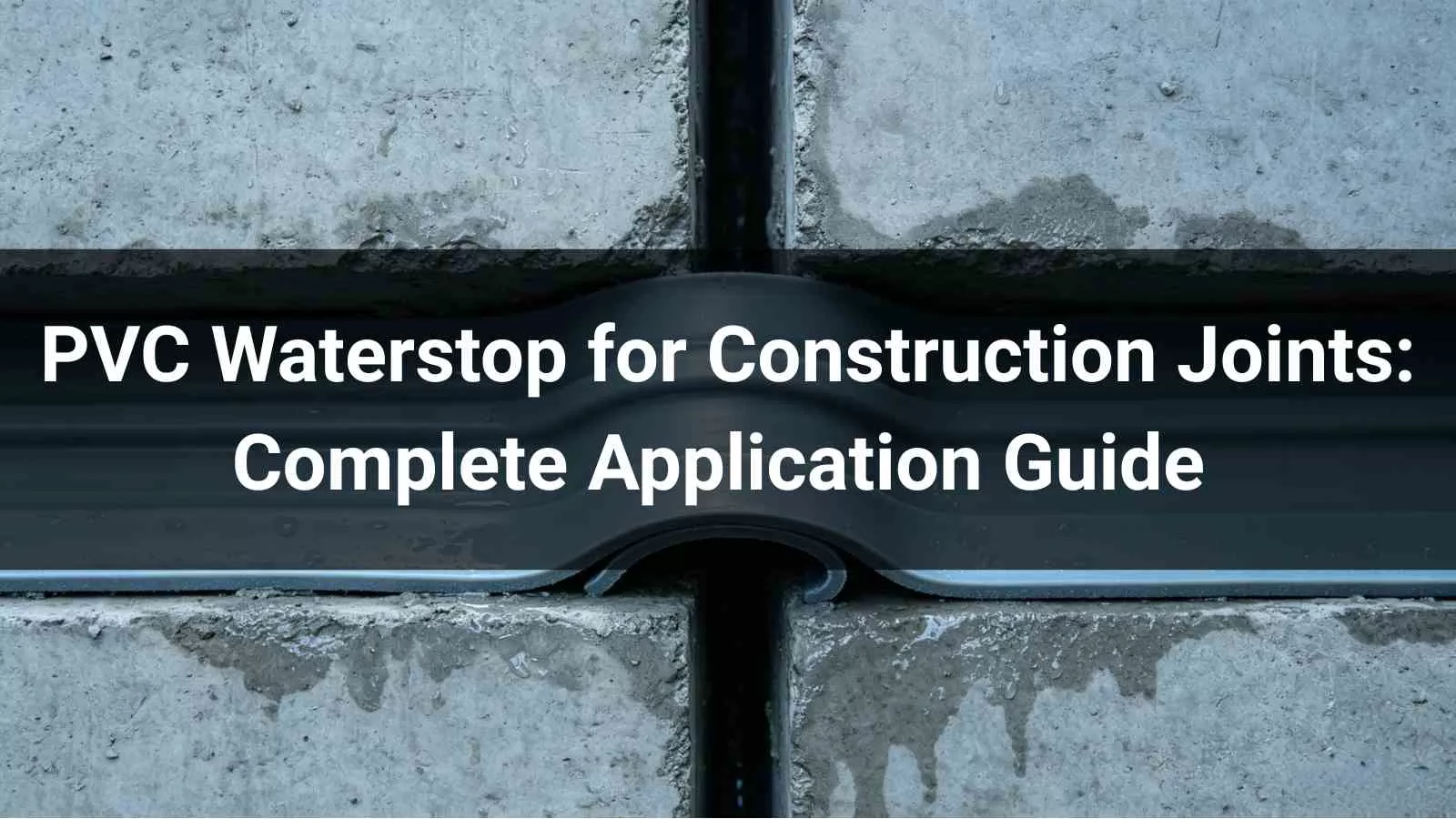
Concrete structures are designed to withstand enormous loads and harsh environmental conditions, yet one of their greatest vulnerabilities lies in an often-overlooked area—the construction joint. Whether in a basement, tunnel, water tank, retaining wall, or dam, these joints can become pathways for water infiltration if they are not properly sealed. Over time, even minor leakage may lead to reinforcement corrosion, concrete deterioration, higher maintenance costs, and a shorter service life.
To address this challenge, engineers commonly specify PVC waterstop, an embedded waterproofing solution that creates a continuous barrier inside concrete joints. Unlike surface coatings or sealants, PVC waterstop is cast directly into the concrete, preventing water from traveling through the joint even under hydrostatic pressure. Its flexibility, durability, and long-term reliability have made it one of the most widely used waterproofing materials in infrastructure, industrial, and commercial construction projects around the world.
However, achieving reliable waterproof performance requires more than simply selecting a PVC waterstop. Different joint types, structural movement, water pressure, and installation methods all influence how well the system performs throughout the life of a project. Understanding these factors is essential for engineers designing structures, contractors carrying out installation, and procurement professionals responsible for selecting suitable materials.
This guide provides a practical overview of PVC waterstop applications in construction joints. From understanding how it works to selecting the appropriate profile and avoiding common installation mistakes, you'll gain the knowledge needed to choose a solution that delivers long-term waterproof protection and project reliability.
| Table of Contents | |
|---|---|
| 1 | |
| 2 | |
| 3 | |
| 4 | |
| 5 | |
| 6 | |
| 7 | |
| 8 | |
Concrete is exceptionally strong in compression, but the joints between separate concrete pours are naturally more vulnerable to water infiltration. This is where PVC waterstop plays a critical role. Embedded within the concrete during construction, it forms a continuous waterproof barrier that blocks water from passing through the joint. For structures exposed to groundwater or hydrostatic pressure, PVC waterstop is considered one of the most reliable and cost-effective solutions for long-term joint waterproofing.
PVC waterstop is a specially engineered profile manufactured from flexible polyvinyl chloride (PVC). It is installed at the center of a concrete joint so that half of the profile is embedded in the first concrete pour and the remaining half in the second. Once the concrete cures, the waterstop becomes an integral part of the structure, preventing water from traveling through the joint.
Unlike surface waterproofing membranes, which protect only the exterior, PVC waterstop provides internal waterproof protection. Because it is permanently embedded inside the concrete, it continues to perform even when the structure is subjected to continuous groundwater pressure.
High-quality PVC waterstops also offer excellent flexibility, chemical resistance, weather resistance, and long service life, making them suitable for demanding infrastructure projects.
Construction joints are intentionally planned joints formed when concrete is poured in separate stages rather than continuously. They are common in almost every large concrete project because it is rarely practical to complete an entire structure in a single pour.
Typical construction joints can be found in:
Although these joints are structurally necessary, they create potential paths for water seepage. Without an effective waterproofing system, groundwater can gradually penetrate through the joint, affecting both the durability and service life of the structure.
Even when construction follows strict quality standards, the interface between two concrete pours is rarely as dense as monolithic concrete. Small voids, shrinkage, settlement, or long-term structural movement can all create channels through which water can migrate.
Once leakage begins, the consequences may include:
For underground and water-retaining structures, preventing leakage at the joint is often far more economical than repairing damage after construction.
| Challenge | How PVC Waterstop Helps |
|---|---|
| Water infiltration through joints | Creates a continuous embedded waterproof barrier |
| Hydrostatic pressure | Resists water penetration under sustained pressure |
| Minor joint movement | Flexible PVC accommodates limited movement without losing its seal |
| Long-term durability | Resists moisture, corrosion, and many common chemicals |
| Maintenance costs | Reduces the likelihood of future repairs caused by joint leakage |
Instead of attempting to stop water after it enters the structure, PVC waterstop prevents water from crossing the joint in the first place. This proactive approach explains why it has become a standard specification for concrete waterproofing in civil engineering projects around the world.
The effectiveness of PVC waterstop comes from a simple but highly reliable principle: it blocks water at the joint before leakage can occur. Instead of relying on surface coatings or sealants, PVC waterstop is permanently embedded inside the concrete, creating a continuous barrier across the construction joint. This internal protection allows the structure to remain watertight even when exposed to groundwater or hydrostatic pressure for many years.
During construction, the PVC waterstop is positioned at the center of the joint before concrete is poured. Half of the profile is cast into the first concrete section, while the remaining half becomes embedded in the second pour. Once both sections have hardened, the waterstop forms a continuous seal inside the structure.
If water reaches the joint, it cannot pass directly through because the PVC profile interrupts its flow path. Instead of moving straight across the joint, the water must travel around the embedded waterstop—a route that is effectively blocked under normal service conditions.
PVC waterstop does not rely on adhesives to stay in place. Instead, its specially designed ribs and anchors become mechanically locked within the surrounding concrete.
This mechanical anchorage offers several advantages:
Proper concrete vibration is equally important because it eliminates air pockets around the waterstop and ensures full contact between the PVC profile and the surrounding concrete.
Many underground structures continuously experience hydrostatic pressure from groundwater. Basements, tunnels, reservoirs, and wastewater treatment plants all require waterproofing systems capable of performing under these demanding conditions.
When correctly selected and installed, PVC waterstop effectively resists hydrostatic pressure by creating an internal barrier within the joint. Combined with quality concrete and proper installation, it helps maintain long-term waterproof integrity even in permanently wet environments.
| Stage | Function |
|---|---|
| Water reaches the construction joint | The joint becomes the primary leakage pathway. |
| Embedded PVC waterstop blocks the joint | The direct flow path is interrupted. |
| Mechanical ribs lock into the concrete | Water cannot easily travel around the profile. |
| Hydrostatic pressure acts on the structure | The embedded barrier continues to resist water penetration. |
| Long-term service | The concrete joint remains protected against leakage. |
A properly installed PVC waterstop is only one part of an effective waterproofing system. Correct profile selection, high-quality concrete placement, and professional installation all contribute to achieving reliable long-term performance.
Choosing the right PVC waterstop profile is just as important as selecting the correct dimensions. Different construction joints experience different levels of movement, water pressure, and structural stress, so manufacturers offer multiple profile designs to meet specific engineering requirements. Understanding the characteristics of each type helps engineers, contractors, and buyers select the most suitable solution for long-term waterproof performance.
The center bulb profile is designed for joints that are expected to experience movement caused by temperature changes, settlement, or structural expansion and contraction. Its flexible central bulb can compress and expand while maintaining a watertight seal, making it the preferred choice for expansion joints and large concrete structures.
Typical applications include bridges, dams, reservoirs, water treatment facilities, and other projects where joint movement is anticipated.
Ribbed PVC waterstop is one of the most commonly specified profiles for construction joints. Multiple ribs along both sides improve the mechanical bond with concrete, creating a longer path for water migration and enhancing sealing performance.
Because most construction joints experience little structural movement after curing, ribbed profiles are widely used in foundations, basements, retaining walls, tunnels, and underground structures.
Dumbbell waterstop features a simple, symmetrical profile that provides reliable waterproofing for standard construction joints. It is easy to install, economical, and suitable for many municipal and industrial projects where joint movement is minimal.
This profile is frequently used in water tanks, pump stations, utility structures, and general reinforced concrete construction.
Flat PVC waterstop has a simpler profile than ribbed or center bulb designs and is generally used in projects with relatively low waterproofing requirements. Although it offers less mechanical anchorage, it remains a practical solution for light-duty concrete structures when properly installed.
Its simple geometry also makes handling and installation more straightforward in certain applications.
| Profile Type | Best Application | Joint Movement | Main Advantage |
|---|---|---|---|
| Center Bulb | Expansion joints | High | Absorbs joint movement while maintaining a waterproof seal |
| Ribbed | Construction joints | Low | Excellent mechanical anchorage and waterproof performance |
| Dumbbell | Standard concrete structures | Low | Cost-effective and easy to install |
| Flat | Light-duty applications | Minimal | Simple design for basic waterproofing requirements |
There is no single "best" PVC waterstop for every project. The ideal profile depends on the joint design, expected movement, water pressure, and project specifications. Selecting a profile that matches the actual service conditions will provide better long-term performance than simply choosing the largest or most expensive option.
PVC waterstop is used wherever concrete structures are exposed to water and construction joints require long-term waterproof protection. From underground buildings to large hydraulic infrastructure, it helps prevent water infiltration, protects reinforced concrete, and extends the service life of the structure. While the installation method is similar across projects, the recommended profile may vary depending on water pressure, joint design, and expected structural movement.
Basements are constantly exposed to groundwater, making construction joints particularly vulnerable to seepage. PVC waterstop creates a permanent barrier inside foundation slabs and retaining walls, helping keep underground spaces dry while protecting reinforcement from corrosion.
Tunnel structures often operate under continuous hydrostatic pressure. PVC waterstop is installed in tunnel lining joints to prevent groundwater from entering the structure, reducing maintenance requirements and improving long-term operational safety.
Water-retaining structures must prevent leakage in both directions—keeping stored water inside while preventing external groundwater from entering. PVC waterstop provides a reliable seal that supports long-term watertight performance in potable water tanks, reservoirs, and industrial storage facilities.
Large hydraulic projects require waterproofing systems capable of performing under significant water pressure. Properly selected PVC waterstops help maintain watertight construction joints in dams, spillways, canals, and other water-control structures where durability is critical.
Wastewater contains chemicals and contaminants that can accelerate concrete deterioration if leakage occurs. PVC waterstop helps protect treatment tanks, channels, and pumping stations by maintaining watertight joints and reducing the risk of environmental contamination.
Retaining walls and foundation systems are frequently exposed to moisture from surrounding soil. Installing PVC waterstop at construction joints helps prevent groundwater from penetrating the structure, improving durability and reducing future repair costs.
| Application | Recommended PVC Waterstop |
|---|---|
| Basement foundations | Ribbed PVC Waterstop |
| Tunnel lining | Ribbed PVC Waterstop |
| Water tanks and reservoirs | Dumbbell or Ribbed PVC Waterstop |
| Dams and hydraulic structures | Center Bulb PVC Waterstop (for movement joints) or Ribbed PVC Waterstop (for construction joints) |
| Wastewater treatment plants | Ribbed PVC Waterstop |
| Retaining walls | Ribbed PVC Waterstop |
Although these recommendations cover many common situations, the final selection should always consider project drawings, joint configuration, expected movement, and design water pressure. Working with an experienced manufacturer can help ensure the selected profile meets both engineering requirements and applicable project specifications.
Selecting the right PVC waterstop involves more than matching a product to a project. The profile, dimensions, material quality, and installation method all influence the long-term waterproof performance of a concrete joint. Even a premium waterstop may fail if it is poorly selected or incorrectly installed. By understanding a few key factors, engineers, contractors, and procurement professionals can significantly reduce the risk of leakage and costly repairs.
The first step is to understand the conditions the waterstop will face throughout the service life of the structure. Important considerations include:
Rather than selecting the largest available profile, engineers should choose a waterstop that matches the structural design and project specifications.
| Project Condition | Recommended Choice |
|---|---|
| Standard construction joint | Ribbed PVC Waterstop |
| Expansion or movement joint | Center Bulb PVC Waterstop |
| High hydrostatic pressure | Wider profile with deeper anchoring ribs |
| Water-retaining structures | High-quality PVC with excellent chemical resistance |
| Large infrastructure projects | Profile selected according to engineering drawings and design specifications |
Proper installation is equally important to product selection. Before concrete placement, the waterstop should be accurately positioned at the center of the joint and securely fixed to prevent movement during pouring.
During construction, contractors should pay particular attention to concrete vibration around the waterstop. Proper consolidation removes air pockets and ensures the ribs are fully embedded within the concrete, creating a strong mechanical bond.
Where multiple sections are connected, joints should be welded according to the manufacturer's recommendations to maintain a continuous waterproof barrier.
After installation, the waterstop should remain correctly aligned and free from twisting, folding, or displacement before the second concrete pour begins.
Many waterproofing failures result from installation errors rather than material defects. Some of the most common mistakes include:
These issues may not be visible immediately after construction but can significantly reduce waterproof performance over time. Careful planning, proper installation procedures, and quality inspection are therefore essential for achieving reliable long-term results.
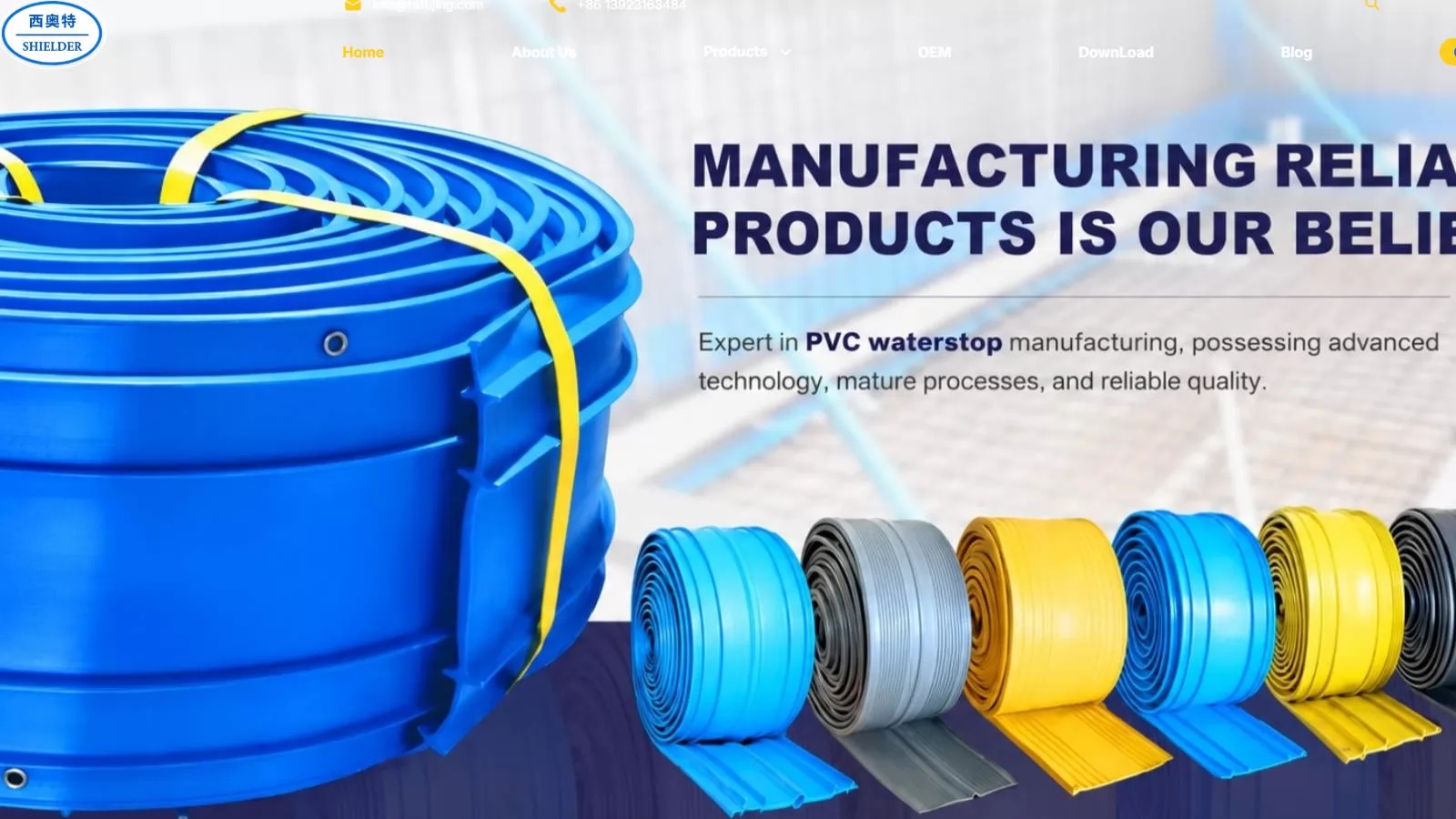
PVC waterstop is one of the most widely used joint waterproofing materials, but it is not the only option available. Depending on the project requirements, engineers may also consider rubber waterstops, hydrophilic waterstops, or metal waterstops. Each material has unique characteristics, making it suitable for different construction environments.
Rather than asking which material is "best," the more important question is which material is best suited to the specific project conditions. Factors such as joint movement, water pressure, chemical exposure, installation method, and project budget should all be considered during material selection.
PVC waterstop offers an excellent balance of flexibility, durability, and cost-effectiveness. It performs well in most construction joints and many expansion joints while providing reliable resistance to groundwater, moisture, and a wide range of chemicals.
Because of its versatility and availability in multiple profile designs, PVC remains the preferred choice for commercial buildings, underground structures, municipal infrastructure, and water-retaining projects.
Rubber waterstops are known for their outstanding elasticity and ability to accommodate larger joint movements. They are commonly specified for bridges, dams, and other structures where expansion and contraction are more significant.
However, rubber waterstops generally have a higher material cost than PVC and may not be necessary for projects with minimal joint movement.
Hydrophilic waterstops are manufactured from materials that expand when exposed to water. Instead of forming a physical barrier like PVC, they seal the joint by swelling and filling small gaps.
They are frequently used as a supplementary waterproofing solution around pipe penetrations, precast concrete joints, and construction details where traditional embedded waterstops may be difficult to install. However, they are generally not intended to replace PVC waterstops in primary construction joints subjected to high hydrostatic pressure.
Metal waterstops, typically manufactured from stainless steel or copper, are used in highly specialized projects requiring exceptional durability or resistance to aggressive chemicals.
Although they provide excellent strength and service life, they are significantly more expensive and require more complex fabrication and installation. As a result, they are usually limited to large hydraulic or industrial facilities with specific engineering requirements.
| Material | Main Advantages | Typical Applications |
|---|---|---|
| PVC Waterstop | Flexible, durable, cost-effective, suitable for most construction projects | Basements, tunnels, water tanks, retaining walls, municipal infrastructure |
| Rubber Waterstop | Excellent elasticity, accommodates larger joint movement | Bridges, dams, expansion joints, hydraulic structures |
| Hydrophilic Waterstop | Expands upon contact with water, easy to install in confined areas | Pipe penetrations, precast joints, secondary waterproofing details |
| Metal Waterstop | Extremely durable, excellent chemical resistance | Specialized hydraulic and industrial facilities |
For most reinforced concrete construction projects, PVC waterstop remains the preferred solution because it provides the best balance between waterproof performance, durability, installation efficiency, and overall project cost. Alternative materials are typically selected only when specific movement, environmental, or chemical resistance requirements justify their additional cost or specialized performance.
A construction joint is created when concrete is poured in separate stages and typically experiences little movement after curing. An expansion joint, however, is designed to accommodate thermal expansion, contraction, and structural movement. Because the performance requirements differ, construction joints usually use ribbed or dumbbell PVC waterstops, while expansion joints often require center bulb profiles.
The appropriate size depends on several factors, including concrete thickness, joint design, expected water pressure, and project specifications. Selecting a larger profile does not always improve waterproof performance. Instead, the waterstop should be sized according to the engineering design and installed with adequate concrete cover on both sides.
Yes. PVC waterstop is widely used in reservoirs, potable water tanks, and water treatment facilities. However, the material should comply with the relevant local standards and project specifications for potable water applications.
When manufactured from high-quality PVC and installed correctly, a PVC waterstop can provide reliable waterproof performance throughout the design life of a concrete structure. Its resistance to moisture, corrosion, and many common chemicals makes it suitable for long-term use in demanding environments.
Minor damage may sometimes be repaired using approved hot-welding techniques. However, severely damaged sections should generally be replaced before concrete placement to ensure the waterproof barrier remains continuous.
Beyond product dimensions and price, buyers should evaluate the manufacturer's production capability, quality control system, material consistency, customization options, testing procedures, and experience with international construction projects. A supplier that provides technical support and application guidance can also help reduce installation risks and improve project outcomes.
PVC waterstop plays a vital role in protecting construction joints from water infiltration and extending the service life of reinforced concrete structures. Whether the project involves a basement, tunnel, reservoir, wastewater treatment plant, or other water-retaining structure, selecting the appropriate profile and ensuring proper installation are essential to achieving reliable, long-term waterproof performance.
While every project has unique design requirements, the same principles always apply: understand the joint conditions, choose a waterstop that matches the expected movement and water pressure, and follow recognized installation practices throughout construction. Focusing on these fundamentals helps reduce maintenance costs, improve structural durability, and deliver better lifecycle value.
For projects requiring standard or customized PVC waterstop solutions, working with an experienced manufacturer can make product selection and implementation more efficient. Companies such as FUFUJING, with expertise in manufacturing a wide range of PVC waterstop profiles for construction and expansion joints, can provide technical support and customized solutions to meet different engineering requirements.
By combining the right product, sound engineering design, and quality installation, PVC waterstop remains one of the most dependable and cost-effective waterproofing solutions for modern concrete construction.


